
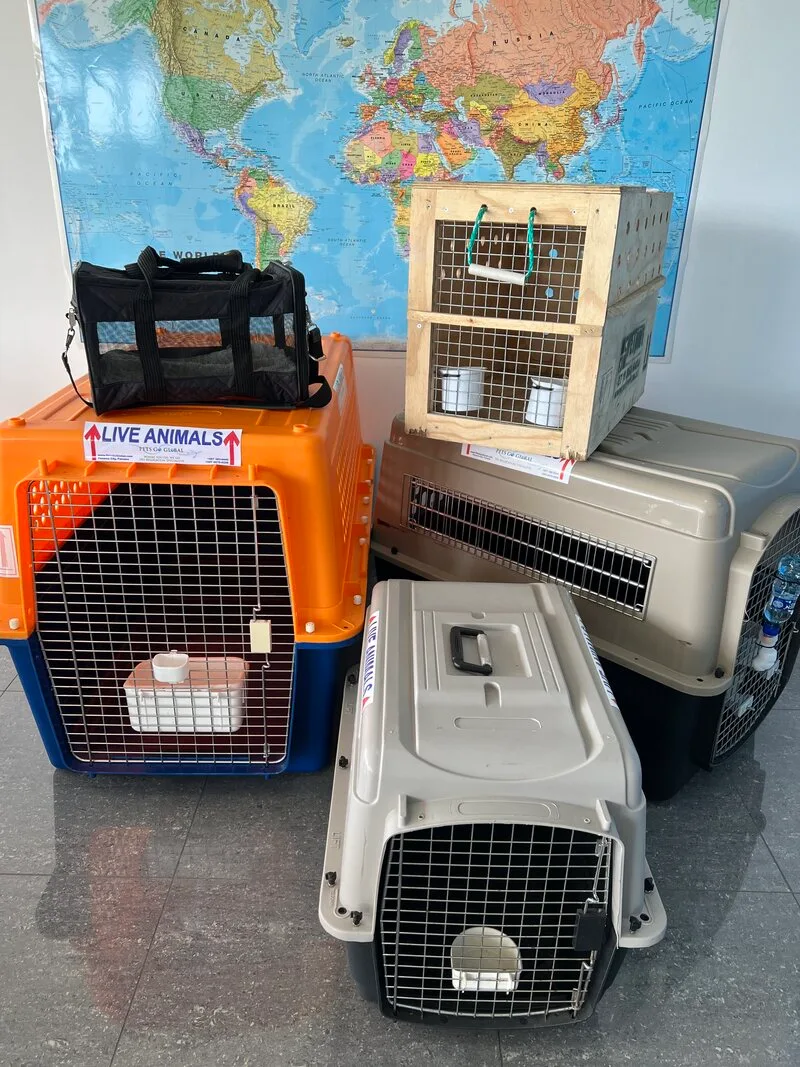
There is no such thing as an IATA approved crate, and IATA says so
IATA states it in its own regulations: it does not certify, approve, endorse or sell any pet container, brand or model. It publishes a written standard, and a crate either meets it or it does not. The words printed on the packaging are marketing, and IATA specifically warns buyers about sellers who claim otherwise.
The term that means something is airline compliant, and the airline decides at check in.
IATA Live Animals Regulations, Container Requirement 1, Edition 52, January 2026.
How the size is worked out
Measure your dog
nose to the base of the tail
ground to the elbow
across the shoulders, or the widest point if that is wider
floor to the top of the head or the ear tips, whichever is higher, standing normally
The crate, measured inside
Length = A plus half of B
Width = C times two
Height = D plus the depth of the bedding
Snub-nosed breeds require 10% larger container.
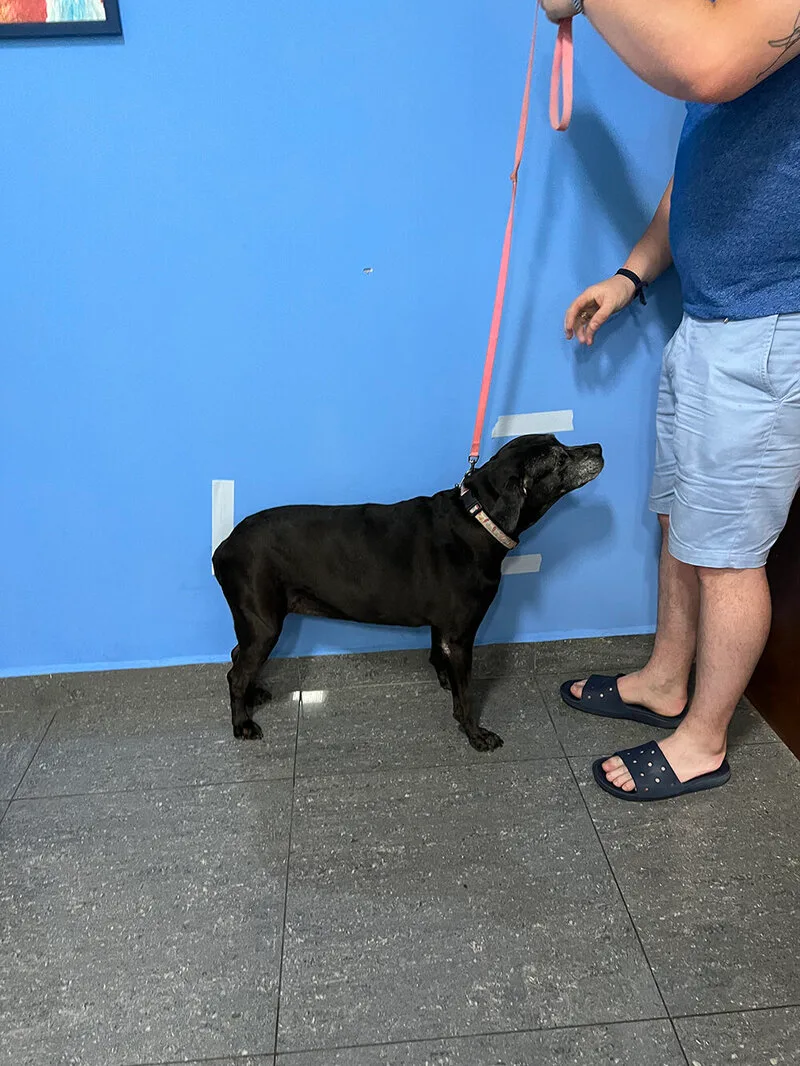
Each animal in the container must have enough space to stand, to sit erect, to lie in a natural position and to turn about normally while standing.
IATA Live Animals Regulations, Container Requirement 1, Edition 52, January 2026.
What check in actually looks at
Ventilation on all four sides. The total ventilated area must be at least 16% of the total surface of the four sides.
Openings over the upper two thirds. Ventilation openings on the sides and back must be placed over the upper two-thirds of the container. Additional ventilation may be provided on the lower third of the front and back of the container.
Top and bottom securely bolted together. Plastic clips must not be the only fasteners holding the top and bottom part together, and metal nuts and bolts in every hole are required.
Wheels removed. If a container has wheels, they must be removed or rendered inoperable.
The whole of one end in welded wire mesh. The whole of one end of the container, which can be the door, must be made of welded wire mesh. Containers made entirely of welded wire mesh, or any other type of wire mesh, must not be used for air transport.
Openings nose and paw proof. Openings must be a maximum of 25 mm x 25 mm for dogs and 19 mm x 19 mm for cats, and may have to be smaller in order to be nose and paw proof.
A water container open at the top. It must be securely affixed inside the container with outside access for filling that does not require opening the container. We place a funnel on the outside that reaches into the bowl. Water bottles or similar dispensers must not be used to replace open containers.
Absorbent bedding. Absorbent bedding that is suitable for the species must be provided.
Labels. A green Live Animals label or tag is mandatory, and This Way Up labels must be placed on at least two opposite sides. We provide the labels.
Check-in staff are responsible for ensuring the container meets the IATA LAR requirements. Should the container not meet the minimum standards, the animal must not be accepted for travel.
IATA Live Animals Regulations, Container Requirement 1, Edition 52, January 2026.
When nothing off the shelf fits
Maximus, a Dogo Argentino bound for Tbilisi. We built the crate, then routed him through Costa Rica to reach a Lufthansa flight that could take it, with comfort stops along the way.
Xinia was too large for any standard crate. She travelled in a custom wooden one to Paris, cleared there, spent a couple of days, and flew on to Italy.
Jasper's crate was too large to fly to Washington DC. He flew to Miami instead and his family drove the last leg. The crate decided the route.
Five animals leaving Mexico, three dogs and two cats. No direct flight to Panama would take a crate that size, so they flew with PetAir México to Bogotá, continued with Luann Pets, and we took over in Panama.
The pattern repeats: fix the crate first, then build the route around it.
Do not sedate your dog for the flight.
Tranquillization is not allowed. Sedation is not allowed either. If a tranquillized animal behaves oddly on the way, nobody can tell whether the drug is causing it or something else is, and that is the one moment when somebody has to know. Most commonly used tranquillizing drugs have the effect of lowering the blood pressure, which also occurs naturally at high altitudes. The air pressure of an aircraft in flight is set at the equivalent of approximately 8,000 ft, and the combination of altitude and drugs is potentially fatal in the old, chronically sick or stressed animals.
Calming by darkening the container and putting it in a quiet place when not in the aircraft will calm most animals. Any medication decision must be made with the treating veterinarian.
IATA Live Animals Regulations, Container Requirement 1, Edition 52, January 2026.
Before you buy anything, send us four measurements
Send us four measurements, your dog's weight and a photo: A, B, C and D from above, and your dog standing next to a tape measure. We come back with the internal size you need and whether your existing crate meets the standard.
We would rather tell you a standard crate is fine than sell you one that is not.